
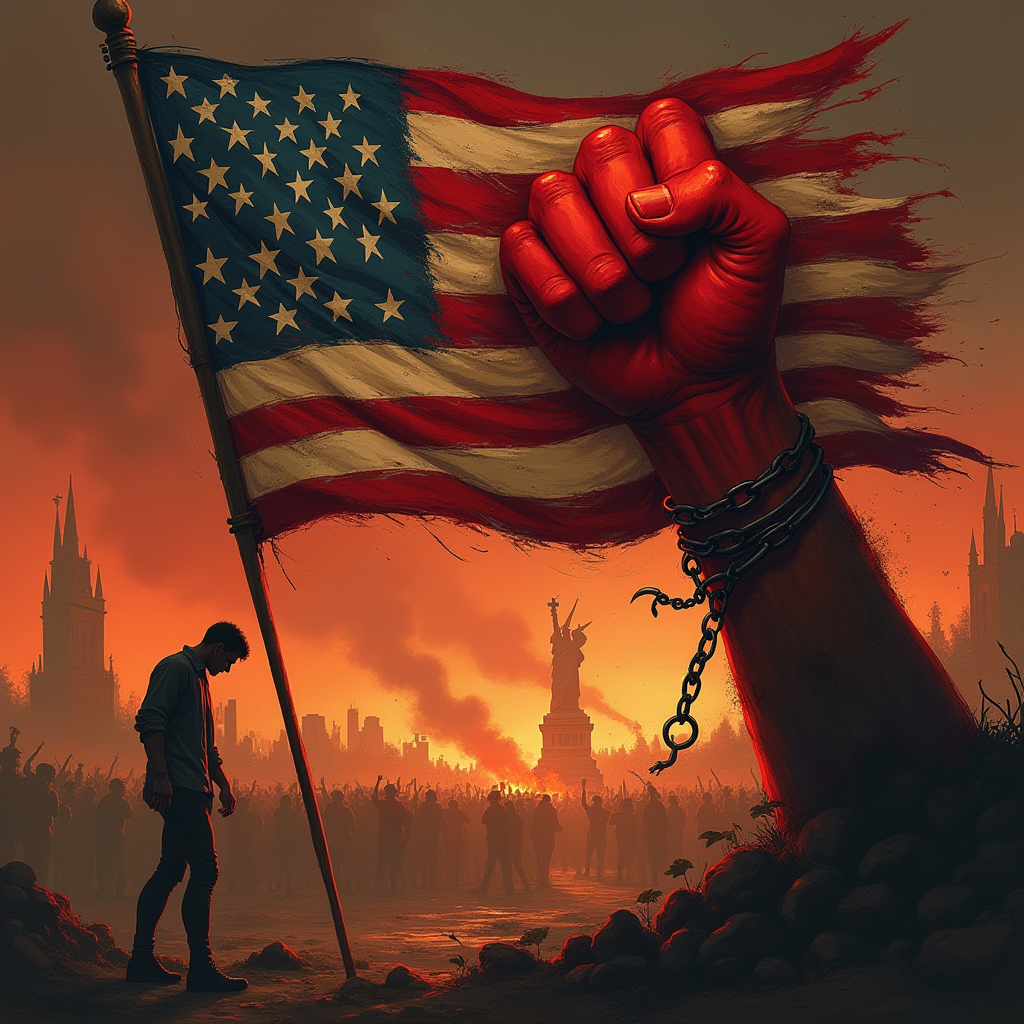
The video series, How Communists Took Over America, explores the infiltration of communist ideologies in the United States. It delves into the rise of prominent intellectuals like Antonio Gramsci and Georgi Lukacs, who aimed to eliminate family, religion, and private property. It highlights the establishment of communist organizations in America, the influence of the Frankfurt School, and the manipulation of high-level government positions by communist sympathizers. It also discusses the impact of communist incursions since the 1920s and the role of key figures like Whittaker Chambers and Elizabeth Bentley in furthering communist agendas.
The main takeaway from this historical case study is that rogue public officials facilitated the communist subversion agenda and serves as a reminder that, once again, safeguarding liberty is a matter of restraining political authority.
In the early 20th century, a subtle yet powerful force began to infiltrate the fabric of American society – communism. The roots of this movement can be traced back to the rise of prominent intellectuals like Antonio Gramsci and Georgi Lukacs, who sought to undermine the pillars of American culture such as family, religion, and private property.
One of the key figures in this infiltration was John Dewey, who admired the Bolshevik revolution in Russia and influenced the modern western schooling system. Dewey, along with Lukacs, aimed to eliminate traditional values and promote radical ideologies through cultural terrorism.
As Lenin organized top Marxist intellectuals to theorize on overthrowing capitalism, communist organizations in America began to grow in size and influence. The establishment of the Institute for Social Research, later known as the Frankfurt School, marked a shift towards focusing on cultural revolution over economic change.
The Frankfurt School's critical theory aimed to criticize society through a Marxist lens, labeling those who upheld existing culture as fascists. This ideology spread through various institutions, including the OSS, where communist sympathizers were able to infiltrate the highest echelons and compromise national security.
The denazification process post-World War II further propagated Marxist ideas, imposing collective guilt on Germans and expanding to implicate all European and American culture. Communist incursions in America since the 1920s, as well as the presence of secret communist cells within the US government, highlighted the extent of the infiltration.
From the false claims of Duranty during the Ukrainian famine to the exposure of communist cells within key government positions by whistleblowers like Whittaker Chambers and Elizabeth Bentley, the blog post delves into the intricate web of communist influence in America.
Part one of this series sheds light on the stealthy rise of communism in America and sets the stage for a deeper exploration of how this ideology took root and flourished in the land of the free. Stay tuned for the next installment to uncover more about the tactics and strategies employed by communists to infiltrate and influence American society.
Subversive Communist Tactics in America.
In the second part of the video series “How Communists Took Over America,” the speakers delve into the intricate ways in which communist ideologies infiltrated various aspects of American society. From the KGB's interest in Maharishi Mahesh Yogi and the influence of Indian philosophy on Americans to the subversion of key institutions and the demoralization of law enforcement, the tactics employed by communists were both calculated and far-reaching.
One of the key points highlighted in the video is the KGB's fascination with brainwashing techniques and their dispatching of agents to check on VIP Americans who were influenced by meditation and drug culture. The KGB saw Americans as naive and easily manipulated, especially those in positions of power. By targeting VIPs and influential individuals, the communists were able to accelerate their transition from the streets to institutions.
The infiltration of left-wing organizations and the legal assistance provided by the National Lawyers Guild to radical groups further exemplified the extent of communist influence in America. The recruitment of clean individuals with no prior records for key positions, particularly in law enforcement, allowed communists to operate under the radar and push their agenda without attracting attention.
The video also sheds light on the impact of postmodern theories and intersectionality on radical leftist movements in America. Rejecting grand narratives and claiming truths to be subjective, these theories aimed to stratify society and organize revolutionary classes based on perceived oppression. Influenced by neo-Marxist thinkers like Marcuse, Adorno, and Foucault, these ideologies sought to establish chaos and demoralize society.
In conclusion, the video emphasizes the importance of cultural education in countering the threats of communism and preserving the values of democracy and freedom. By understanding the subversive tactics employed by communists in the past, we can better equip ourselves to safeguard our institutions and uphold the principles that make America a beacon of liberty and democracy.
A Historical Perspective on the Communist Takeover of America.
In the third part of the series “How Communists Took Over America,” the speakers delve into the various instances of espionage and subversion that led to the infiltration of communist ideology in the United States. From Soviet nuclear tests shocking the nation to the execution of Ethel and Julius Rosenberg for espionage, the timeline of events paints a vivid picture of the communist influence in America during the 1950s and 1960s.
One of the key figures mentioned is Herbert Marcuse, whose ideology on society and the emergence of utopia played a significant role in shaping the mindset of individuals during that era. The widespread communist subversion led to anti-communist views, sparking hearings by the House of Un-American Activities Committee and exposing individuals like Owen Lattimore and John S Service for their involvement in espionage.
The intervention in the Korean War under General Douglas MacArthur proved to be a turning point in the fight against communism, as his forces pushed back the communist threat. However, President Truman's decision to halt MacArthur's advances raised questions about the extent of communist infiltration in the government and military.
Senator Joseph McCarthy's controversial methods in exposing high-ranking communists, with the assistance of Roy Cohn, shed light on the extent of communist influence in various sectors of society. The ACLU, founded by communists with the goal of promoting communism, protested against the House Committee, leading to chaos caused by student protesters and setting the stage for activism in the 1960s.
The blog also touches on the case of Otto Otepka and his refusal to clear Walt Rostow despite security concerns, as well as Harlan Cleveland's questionable actions and ties to Alger Hiss. The testimony of William Wieland, who concealed his past connections with the Cuban Communist Party, highlights the lengths to which individuals went to conceal their communist ties.
As the counterculture of the 1960s embraced Marcuse's ideas of unconstrained sexuality and repressive tolerance, the environmental movement added to the criticism of western capitalism. The defection of Yuri Bezmanov from the USSR in 1970 and the exposure of communist ideology in Solzhenitsyn's Gulag Archipelago forced neo-Marxists to reevaluate their language and tactics.
Overall, the blog provides a comprehensive overview of the communist takeover of America, highlighting the key events, individuals, and ideologies that shaped the nation's history during that tumultuous period. It serves as a reminder of the importance of vigilance against subversion and the preservation of democratic values in the face of external threats.